Monday, 13 May 2024

Donald Brun - Part 2

The recognisable and often comedic style of graphic designer Donald Brun (1909-1999) has many fans, and so do the posters that he made for Swiss yard producer Zwicky, both of which can be seen in the Cat Cabinet. Brun was born in Switzerland in 1909 and studied at the Allgemeneine Gewerbeschule (General commercial school) while working in Basel as a graphic designer at a design studio. After this study he went to Berlin to continue developing his work and studied at the Akademie fur Freie und Angewandte Kunst (Academy for free and applied arts).

The many posters designed by Brun give an insight into his art and his use of many different styles and techniques. Often you can see the lively and friendly influences in his illustrations. Brun worked for many international companies, including ones from the United States, Germany, United Kingdom, Austria, Belgium and the Netherlands. In 1951 he was one of the founders of AGI – Alliance Graphique Internationale – an elite club for leading graphic designers and artists, and from 1970 until 1972 he took over the role of International President. Works by Brun were showered with many awards and to this day occupy spaces in many permanent exhibitions around the world.

For more information about Donald Brun, and for earlier works, see part 1 also.

This is part 2 of a 4-part series on the works of Donald Brun:
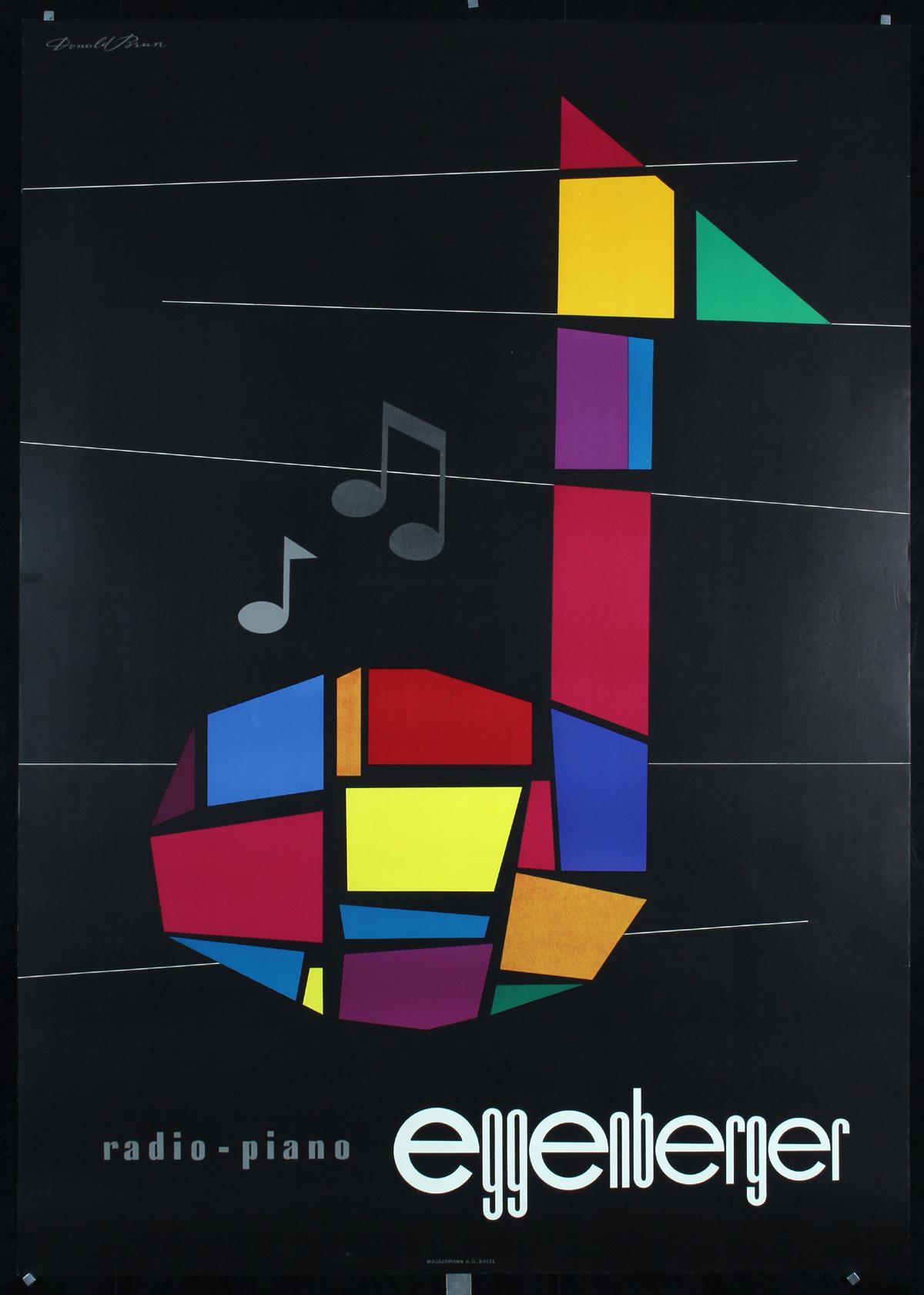
1949 radio-piano eggenberger
colour lithograph 128 x 90 cm

1949 Tenta Toiles - Stores
colour lithograph 128 x 90 cm

1949 Vacances en Suisse
(Holidays in Switzerland)
colour lithograph 102 x 64 cm

1950 Contra-Schmerz
(Pain killers)
colour lithograph on linen 102 x 65 cm

1950 Contre douleurs
(Pain killers)
colour lithograph on linen 1o1.5 x 64 cm

1950 Contre-douleurs votre reméde
(Pain killers - your remedy)
colour lithograph on linen 128 x 91 cm

1950 Internationale Musikfestwochen, Luzern
(Musical Festival Weeks, Lucerne)
photolithograph 127.9 x 89.2 cm
MoMA, New York

1950 Ms Stella Polaris, Clipper Line , Malmo, Sweden
colour lithograph 98 x 62 cm

1950 Swissair
colour lithograph on linen 102 x 64 cm

1950 Tenta, Wasserdichte Stoffe
(Tenta, Waterproof Fabrics)
 colour lithograph 128 x 90 cm

1950 Tuch A.-G.
colour lithograph 128 x 90 cm

1950 Zwicky Sysilke
colour lithograph 84.5 x 61.5 cm

c1950 Autol Extra motor oil
colour lithograph 125.5 x 90 5 cm

c1950 Benger (Swim Wear)
colour lithograph on linen 47 x 31.5 cm

c1950 Gauloises Caporal cigarettes
colour lithograph 128 x 90 cm

c1950 Gevaert Roll-Film
colour lithograph 126 x 90.5 cm

c1950 Locarno, Switzerland
colour lithograph 101 x 64 cm

c1950 Meccarillos cigarillos
colour lithograph 125 x 90 cm

1950s Arosa ski resort,Switzerland
colour lithograph

1950s Bally footwear
offset lithograph 127.6 x 90 cm
MoMA, New York

1950s gut gewappnet mit Binaca
(well armed with Binaca)
colour lithograph 128 x 90 cm

1950s Kühle mit GAS
Cool with Gas)
colour lithograph 50.3 x 35.4 cm

1951 ...si, lavato col Persil!
(...yes, washed with Persil!)
colour lithograph 128 x 90 cm

1951 Bell
(Swiss meat processing company)
colour lithograph 127.5 x 90 cm

1951 Gesund und Gut mit Butter
(Healthy and good with butter)
lithograph 126.4 x 88.8 cm
MoMA, New York

1951 Henniez
colour lithograph 128 x 90 cm

1951 Memphis Doppel-Filter
(Memphis Double-Filter
colour lithograph 126 x 89 cm

1951 Olma
colour lithograph 128 x 90 cm

1952 Bell (Swiss foods)
colour lithograph 127 x 90 cm

1952 Klosters (Swiss ski resoert)
colour lithograph 102 x 64 cm

1952 Liebig Fleisch-Extrakt
(Liebig meat-extract)
colour lithograph 127 x 90 cm

1952 Rheinbrücke, Basel (department store)
colour lithograph 128 x 90 cm

1953 Maggi Exra Suppen
(Maggi Beef Broth)
colour lithograph 84 x 59 cm

1953 Arosa Weisshorn-Bahn
colour lithograph 102 x 64 cm

1953 Nescafé
colour lithograph 128 x 90.2 cm

1953 Tenta
colour lithograph 50.3 x 35.4 cm

1953 Nomotta wool
colour lithograph (size not given)


Friday, 10 May 2024

Donald Brun - Part 1

If you open one of the numerous acid-free boxes of poster drafts by Donald Brun in the Swiss National Museum’s prints depot, you delve into a colourful world. One that is both colourful and richly populated! That’s because this graphic designer liked to bring the products in his advertising posters to life. For example, an advertisement for hoses does not simply show a lifeless tool; it demonstrates the useful, beneficial and obviously pleasing effect of the product for sale in a very tangible manner. The hose becomes the trunk of an elephant, which observes the pleasing effect out of the corner of its eye with an apparent smile.

A bar of Toblerone is also brought to life. The proud posture of the chocolate motivated the graphic designer to turn it into a star – a kind of singing sensation with a chocolate microphone, which was bound to please the client. Though there are two ways of reading this image – it might also be that the Toblerone with silver wavy hair is not singing but about to snack on another Toblerone bar. You are what you eat, you might think, but that will send us down the path of discussing chocolate cannibalism, and we are not going to go there.

This Basel designer did not just promote products of everyday use or consumption – the chemical industry was also a major client. He designed numerous exhibition stands for companies in the chemical industry at the Basel Sample Fair, and he also created the Pavilion for Chemistry at Expo 58 in Brussels. This is also evident in Brun’s poster work. Although a huge variety of products are advertised here, the drafts and posters clearly show that this freelance graphic designer enjoyed placing the advertised product in the limelight, generally with very few words and plenty of wit and colour instead.

    From 1927 to 1930, Donald Brun completed a three-year apprenticeship as an advertising Illustrator under Ernst Keiser, who was a calligraphy teacher back then on the professional graphic design course at the General Vocational School in Basel. This job title of advertising illustrator also describes Brun’s technical approach very well. Rarely did he work with the medium of photography; he almost always designed his posters graphically. This was a philosophy that he also passed on during his many years as a specialist teacher (1946-74) at the Vocational School in Basel. He demanded from his students that the drafts were designed using pencil, ink and brush on paper.

Scissors and glue are also among the tools often used by Brun. He often designed his poster drafts as collages. For example, he used a box of cigars to represent the body of the famous Gauloises rooster. He also used this technique with other birds, such as the beautifully stylish Merrent bird advertising clothing for men and women. Even though clothing fashions change and the techniques used by graphic designers today are different, Donald Brun’s posters still make so many people smile with their rich colours and humour.


This is part 1 of a 4-part series on the works of Donald Brun:


1928 Bader
colour lithograph

c1936 So suggestiv
 colour lithograph 127 x 89.5 cm

1940s Gevaert Film
colour lithograph 128 x 90 cm

1940s Persil
colour lithograph 128 x 90 cm

CO-OP Kaffee preiswert und gut
(CO-OP coffee is cheap and good)
colour lithograph 90 x 64 cm


1944 Das Schaufenster
(The Shop Window)
colour lithograph 127 x 89 cm

1944 Gevaert rollfilm
colour lithograph 127 x 90 cm

1945 Contre-douleurs
(Painkilers)
colour lithograph 128 x 90 cm

1945 Helvetia, Take one home for your folks
colour lithograph 128 x 90 cm

1945 Le No. 11 renseigne
(No. 11 provides information)
colour lithograph 128 x 90 cm


1945 Rheinbrücke Bâle pour tous vos achats
(Rheinbrücke Bâle for all your purchases)
colour lithograph 127 x 90 cm

1946 Bata
colour lithograph 126 x 90 cm

1946 Bata
colour lithograph 126 x 90 cm

1946 Elna (sewing machines)
colour lithograph 128 x 90 cm

1946 Frauenstimmrecht Nein
(Women's Suffrage, No)
colour lithograph 127.5 x 90 cm


1946 Gevaert Film
 colour lithograph 127 x 90 cm

1946 Helvetia, Take one home for your folks!
127 x 77.5 cm

1946 Okarbol XEX Wintersoritzung
(Winter preparation)
colour lithograph 126 x 89.5 cm

1946 Roger & Galle, Paris
 colour lithograph 127 x 90 cm

c1946 besser waschen mit Persil
(better wash with Persil)
colour lithograph 50.3 x 90 cm

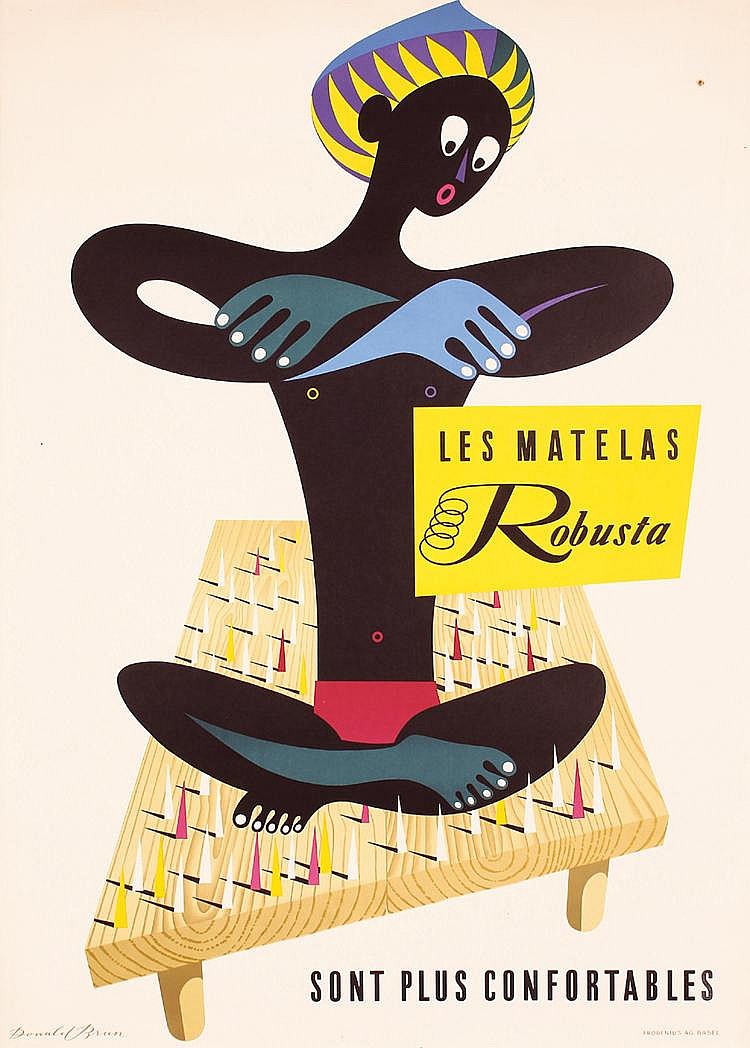
c1946 Les Matelas Robusta
(Robust Mattresses)
colour lithograph 126 x 90 cm

1947 Aronal Vitamin-Zahnpasta
colour lithograph on linen 127 x 90 cm

1947 Articoli economici
(Cheap items)
colour lithograph 90 x 50.3 cm

1947 Gevaert Film
colour lithograph 127 x 90 cm

1947 Persil washing powder
colour lithograph 128 x 90 cm

1947 Schuhhaus Althaus & Cie
(Shoe Shop Althaus & Cie)
colour lithograph 128 x 90 cm

1947 Tobler - Chocolat
colour lithograph 128 x 90 cm

1947 Vasenol Kinderpuder
(Vasenol  children's powder)
colour lithograph 100 x 69.5 cm

1948 Dalang Eierteigwaren
(Dalang Egg Noodles)
 colour lithograph 50.3 x 35.4 cm

1948 Gevaert Roll-Film
colour lithograph 126 x 90.5 cm

1948 Persil washing powder
colour lithograph 128 x 90 cm

1948 Schaffhauser Wolle (Wool)
colour lithograph 125.3 x 88.8 cm

1948 Téléphonez!
colour lithograph 128 x 90 cm

1949 Davos
(Swiss ski resort)
 colour lithograph 101 x 64 cm

1949 Dispos Comme un Oiseau!
(Ready Like a Bird - painkillers)
colour lithograph on linen 127 x 91 cm

1949 Liebig, Cubes de Bouillon
colour lithograph 128 x 90 cm

1949 Parisiennes Maryland cigarettes
colour lithograph 128 x 90 cm

n.d. Original draft artwork for a hose advertisement
(details not given)
 Swiss National Museum, Zürich

n.d. Original draft artwork for a Toblerone advertisement
(details not given)
 Swiss National Museum, Zürich